If you are taking a GLP-1 medication and losing a significant amount of weight, it is important to think about more than the number on the scale. In my previous blog, GLP-1 Muscle Loss: Why Maintaining Muscle and Strength Matters, I discussed why maintaining muscle, strength and bone health deserves attention during significant weight loss.
But knowing that strength training can help is only the beginning. How much resistance should you use? Which exercises are right for you? What if you have painful knees, a bad back, osteoporosis or have not exercised in years? And how do you become stronger without getting hurt?
That is where physical therapy can be particularly valuable.
As a physical therapist with experience in fitness counseling and Pilates, I can help you develop a GLP-1 strength training program based on where you are now and where you want to go.
Start With Where You Are Now
There is no single exercise program that is appropriate for everyone taking a GLP-1 medication.
You may be starting from a relatively high level of fitness. Or perhaps knee, hip or back pain has kept you from exercising regularly. You may have arthritis, an old injury, poor balance, osteopenia or osteoporosis. You may simply have become less active over time and not know where to begin.
Before deciding which exercises you should do, I want to know what your body can do now.
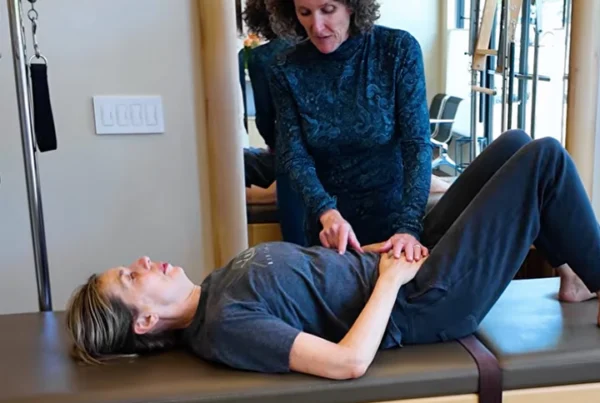
A physical therapy evaluation can look at your strength, mobility, balance, posture and movement patterns. I can also identify areas of weakness or limitations that could affect how you exercise.
This gives us a starting point. Rather than handing everyone the same list of exercises, we can build a program around your individual needs and abilities.
Ideally, strength training should be part of the plan from the beginning rather than something you think about only after you notice that you have become weaker.
Strength Training Needs to Be Challenging
If the goal is to maintain or build strength, your muscles need an appropriate challenge.
For years, women were often encouraged to exercise with very light weights out of concern that heavier weights would make them look bulky or “muscle bound.” Using heavier resistance does not automatically result in large, bulky muscles. Building substantial muscle size generally requires a specific combination of training volume, intensity, nutrition and time. For most adults, progressively increasing resistance is about making muscles stronger and helping preserve the muscle they already have, not dramatically increasing muscle size.
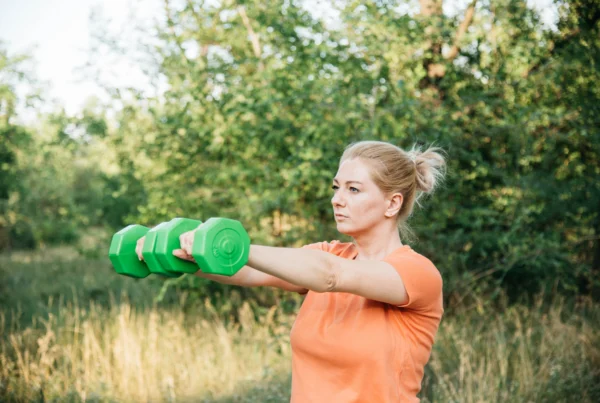
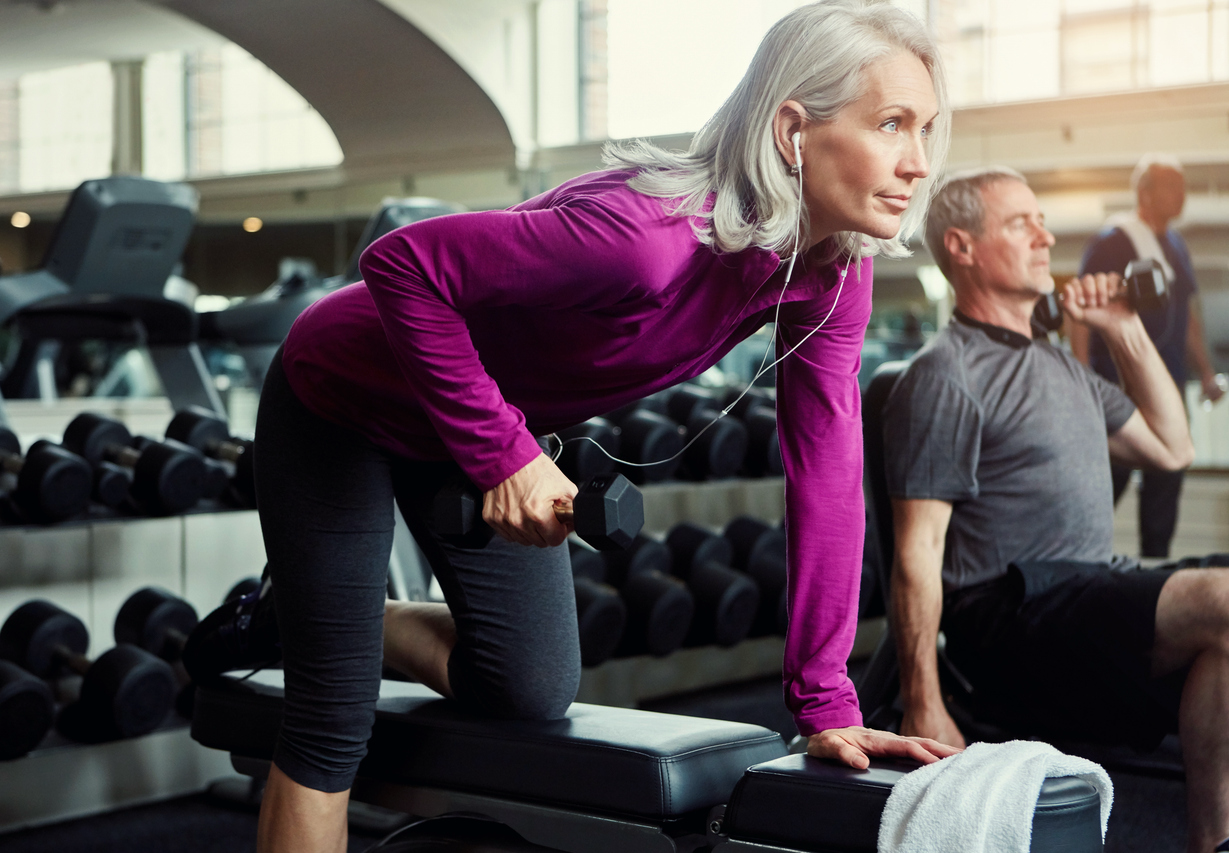
Resistance can come from dumbbells, barbells, weight machines, resistance bands or your own body weight. What matters is that the exercise provides enough resistance to challenge your muscles and that the resistance progresses as you become stronger.
Research involving postmenopausal women illustrates why this matters. The LIFTMOR trial studied postmenopausal women with low bone mass who participated in supervised high-intensity resistance and impact training twice a week for eight months. Compared with women following a low-intensity home exercise program, the women doing the supervised high-intensity program had better outcomes in lumbar spine bone mineral density and several measures of physical function.
That does not mean everyone should pick up a heavy barbell tomorrow. The women in the LIFTMOR program were screened and their training was closely supervised. The lesson from this research is that we should not assume light exercise is always enough. The challenge is finding the appropriate resistance for you.
And this is not just a concern for women. Men can also lose muscle during significant weight loss. For men taking a GLP-1 medication and losing a significant amount of weight, resistance training can help preserve muscle and strength while the weight comes off.
Progressing Safely Is Part of GLP-1 Strength Training
Your starting point and your eventual goal are not necessarily the same.
If you have been inactive, have joint pain or have never lifted weights, we may need to begin conservatively. As your strength, technique and confidence improve, the resistance can gradually increase.
I can also teach proper body mechanics and lifting techniques so you know how to perform an exercise correctly. Sometimes a relatively small change in position or technique can make an exercise more comfortable or appropriate for a particular joint.
This becomes especially important when you have an existing problem. A person with knee osteoarthritis may need a different starting point from someone with chronic back pain. Someone with osteoporosis may need modifications that another person does not.
The National Institute of Arthritis and Musculoskeletal and Skin Diseases recommends resistance, weight-bearing and balance exercise for bone health but advises people with low bone density, osteoporosis or other physical limitations to get help choosing activities that are safe and appropriate for them.
The goal is not to make exercise easy. It is to make it appropriately challenging without unnecessarily increasing your risk of injury.
Strength Should Translate into Everyday Life
 I do not look at strength simply in terms of how much weight you can lift.
Can you get up from the floor? Carry groceries? Climb stairs comfortably? Maintain your balance when you stumble? Lift something from the floor without hurting your back? Continue doing the recreational activities you enjoy?
These are the things strength is for.
That is why a GLP-1 strength training program can include more than traditional weightlifting. Depending on your needs, we may work on balance, mobility and movements that translate directly into the things you need or want to do in everyday life.
The goal is not simply to make individual muscles stronger. It is to help your body function better as a whole.
Where Does Pilates Fit In?
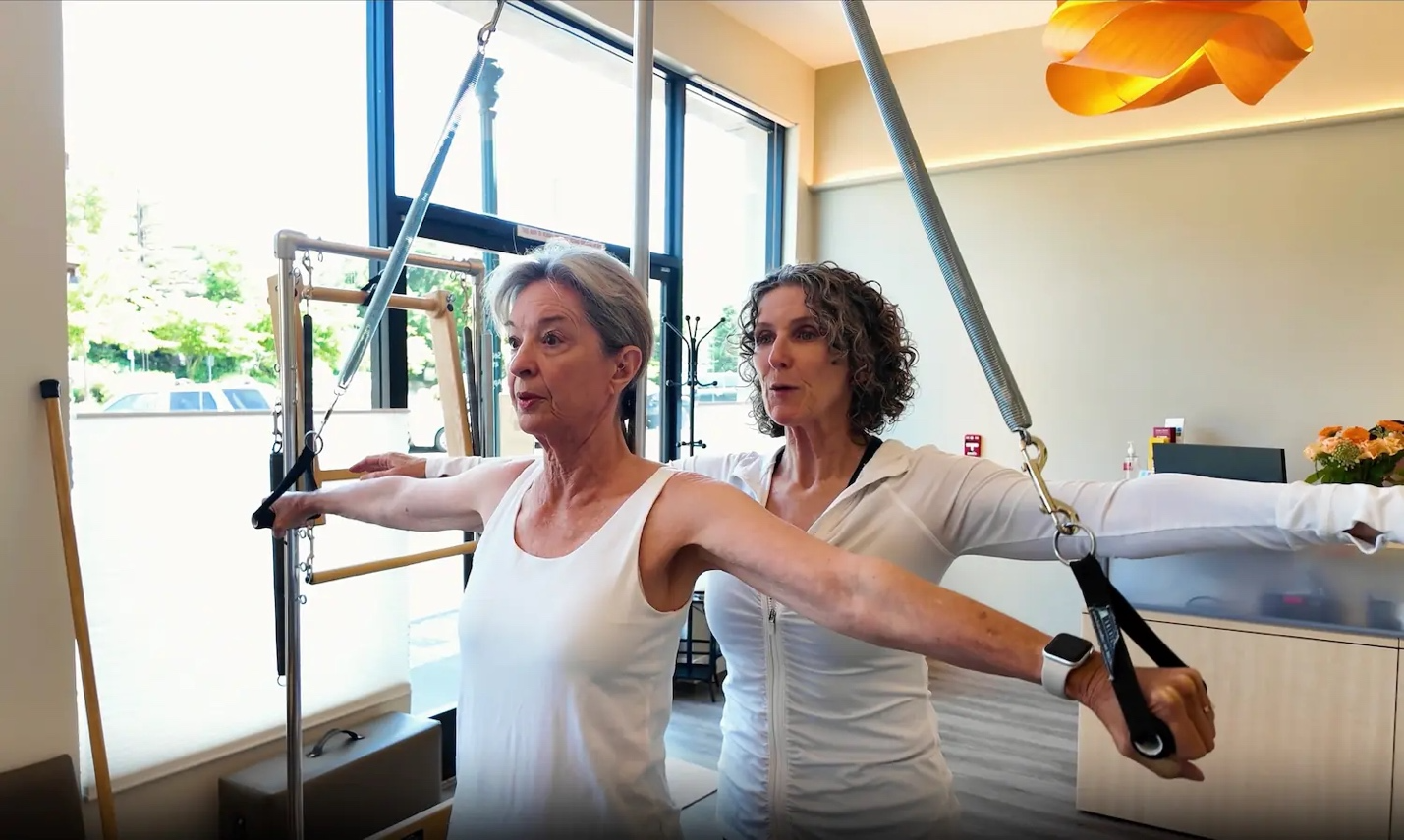 Pilates can be another useful part of a well-rounded exercise program. It can help improve core strength, stability, flexibility, balance, body awareness and movement control.
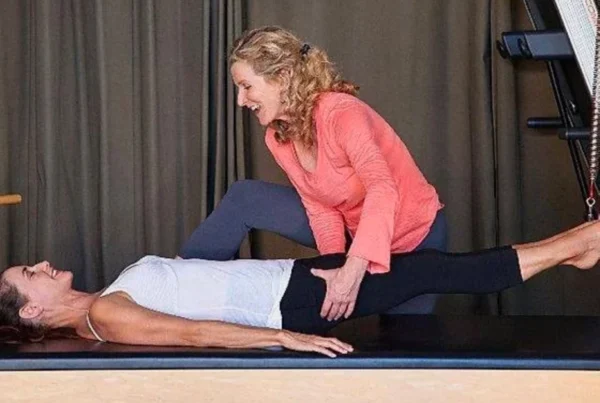
I incorporate Pilates into physical therapy when it is appropriate for the individual. Because I am both a physical therapist and a Pilates instructor, I can modify exercises around an injury, pain or other physical limitation rather than expecting you to adapt yourself to a standard class.
Pilates does not have to replace resistance training. The two can complement each other.
For someone losing a significant amount of weight, the goal is to build an exercise program that addresses the whole person: strength, mobility, balance, control and the ability to move confidently.
Nutrition Is Part of the Conversation, Too
Exercise is only one part of maintaining muscle and physical function during weight loss. Your body also needs adequate nutrition.
As a physical therapist, I can provide nutritional counseling and help you think about how your eating habits support your exercise and physical goals. When more specialized nutrition care is needed, that may also mean working with or referring you to another healthcare professional.
This can be particularly worth thinking about when your appetite has changed significantly and you are simultaneously asking your body to maintain muscle and adapt to progressively more challenging exercise.
Build Strength for the Life You Want to Live
If you are taking a GLP-1 medication, the exercise portion of your weight-loss plan should be about more than checking a box that says you worked out. It should have a purpose.
I want to know where you are starting, what might be getting in your way and what you want your body to be able to do. From there, we can choose appropriate exercises, determine the right level of resistance, work on proper technique and gradually progress the program as you become stronger.
At Kathleen McDonough Physical Therapy & Pilates, I can combine physical therapy, strength training and Pilates to develop a program based on your goals, abilities and physical limitations.
The goal is not simply to weigh less. It is to build and maintain a body that is strong enough to keep doing the things you want to do.