
Breathing is something we all do automatically, but the way we breathe can have a surprising effect on how we move and feel. One of the things I enjoy teaching my patients is how breathing affects the way the body moves. Most people are surprised to learn that efficient breathing helps support healthy posture, core stability, and comfortable movement throughout the day.
When people think about improving their posture, they often picture sitting up straighter or pulling their shoulders back. While those things can play a role, healthy posture is really about how your whole body works together. Breathing is an important part of that process.
At my physical therapy and Pilates practice in San Anselmo, I help people better understand how their bodies move so they can reduce unnecessary strain and move with greater ease. Whether you are recovering from an injury, managing chronic pain, or simply looking to improve the way you move, learning to breathe efficiently is a simple skill that can support healthy posture and everyday movement.
Why Breathing Matters More Than You Might Think
When most people think about breathing, they think about getting oxygen into their lungs. While that is certainly its primary job, breathing also plays an important role in how your body supports itself during everyday activities.
Your diaphragm, the large muscle beneath your lungs, works together with your abdominal muscles, pelvic floor muscles, and the deep muscles that support your spine. Together, these muscles create a natural support system that helps stabilize your body while allowing you to move efficiently.
When these muscles are working well together, they help support healthy posture whether you are sitting at your desk, walking your dog, reaching into a cabinet, or exercising. Breathing becomes part of your body’s natural rhythm instead of something you have to think about.
I often tell my patients that our bodies are designed to move efficiently. Sometimes, however, we develop habits over time that interfere with that natural movement. Stress, injury, pain, long hours of sitting, or even simply trying too hard to “stand up straight” can lead to unnecessary muscle tension that affects the way we breathe and move.
Fortunately, our bodies can also learn healthier movement patterns. Becoming more aware of your breathing is often a simple place to begin.
Could Your Breathing Be Affecting the Way You Move?
Many people are unaware of their breathing habits until someone points them out. I often see people who carry unnecessary tension in their neck and shoulders or hold their breath while concentrating, lifting something heavy, or exercising. These are common habits, and they do not necessarily mean something is wrong. They simply tell me that your body may be working harder than it needs to.
You may benefit from paying closer attention to your breathing if you notice that you:
- Frequently carry tension in your neck or shoulders.
- Feel stiff after sitting for long periods.
- Find yourself holding your breath during daily activities or exercise.
- Notice your shoulders lifting every time you take a breath.
- Feel like maintaining healthy posture requires constant effort.
These habits often develop gradually, so they can feel completely normal. The good news is that with awareness and practice, many people learn to breathe more efficiently, allowing their bodies to move with less tension and better support.
Try This Simple Breathing Exercise
One of the easiest ways to begin improving your breathing is to notice how your body moves with each breath.
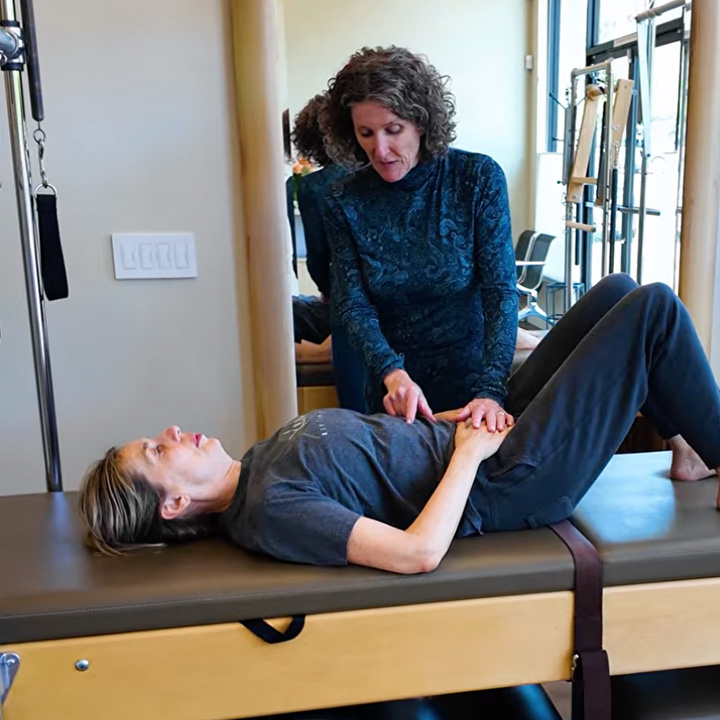
In this short video, I demonstrate a simple breathing exercise that helps you become more aware of how your breathing supports healthy posture and movement. As you watch, notice how small adjustments in your breathing can help your body work more efficiently.
When practicing this exercise, begin by lying comfortably on your back with your knees bent and your feet supported. Gently tilt your pelvis forward and backward until you find a comfortable position, it is going to be somewhere in the mid-range.
As you inhale, allow your ribs to gently expand. Rather than lifting your shoulders, think about letting your rib cage widen as your lungs fill with air.
As you exhale, allow your body to relax while gently engaging your abdominal muscles—as though you are comfortably fastening a belt around your waist, zipping into tight jeans or buttoning a vest. Try to keep your pelvis relaxed and steady rather than allowing it to move with every breath.
This is not about forcing your breathing or bearing down with your muscles. The goal is simply to allow your breathing muscles and core to work together the way they were designed to.
Bringing Better Breathing into Your Everyday Life
One of the things I appreciate most about this breathing technique is that you can practice it almost anywhere. You do not have to set aside a lot of time or purchase any special equipment. The more often you become aware of your breathing during everyday activities, the more natural healthy breathing patterns can become.
As you go through your day, notice whether you are breathing comfortably or whether you find yourself holding your breath or tightening your shoulders. Simply bringing awareness to your breathing is often the first step toward making positive changes.
As you get better at the breathing exercise lying down, you can practice efficient breathing while:
- Sitting at your desk or reading a book
- Standing in line at the grocery store
- Walking around your neighborhood
- Lifting groceries or doing household chores
- Practicing Pilates or other forms of exercise
As you inhale, allow your ribs to gently expand. As you exhale, let your abdominal muscles engage naturally without forcing the movement or changing the position of your pelvis. With practice, this pattern can begin to feel more natural and become part of the way your body moves every day.
Remember, the goal is not to create “perfect” posture. The goal is to help your body move more efficiently with less unnecessary tension.
Healthy Movement Is About More Than One Muscle
Our bodies are designed to work as a team. Healthy movement is not created by one muscle or one joint working harder than the others. Instead, it happens when different parts of the body work together efficiently.
That is one of the reasons breathing is so important. Your breathing muscles, abdominal muscles, pelvic floor, and the muscles that support your spine all contribute to the stability your body needs for everyday activities. When they are working together, many movements feel smoother and require less effort.
This is also why I encourage my patients to think about movement as a whole rather than focusing on just one area that hurts. Whether someone is experiencing neck pain, shoulder discomfort, back pain, or recovering from an injury, I want to help them understand how their entire body works together to support healthy movement.
Small changes in breathing mechanics can sometimes become one piece of a much larger solution.
How Physical Therapy Helps You Move Better
Sometimes pain and stiffness develop because the body has adapted to injury, weakness, or movement habits that place unnecessary strain on muscles and joints. Rather than focusing only on the area that hurts, I evaluate how your entire body moves to identify the underlying factors that may be contributing to your discomfort.
Every treatment plan is individualized because no two people move exactly the same way. Depending on your needs, treatment may include hands-on physical therapy, Pilates-based exercises, movement retraining, and practical strategies you can continue using at home to reinforce healthier movement patterns.
Throughout this blog, I have focused on breathing because it is one important piece of the puzzle. Lasting improvement often comes from looking at the body as a whole. My goal is to help you improve mobility, build strength and stability, reduce unnecessary strain on your joints and muscles, and move with greater confidence so you can continue enjoying the activities that matter most to you. If pain, stiffness, or movement challenges are keeping you from living life to the fullest, I invite you to schedule an appointment. Together, we can identify the underlying causes of your discomfort and develop a personalized treatment plan to help you move better and feel your best.
Building a Strong Foundation
Whether you are seeing me for physical therapy to rehabilitate a painful area or beginning a Pilates practice, breathing is the first and most fundamental exercise we do together. It creates the foundation for healthy movement and helps your body work more efficiently.
If pain, stiffness, or movement challenges are affecting your daily life, I encourage you to schedule an appointment. Together, we can identify the underlying causes of your discomfort and develop a personalized treatment plan to help you move and feel your best.
Frequently Asked Questions
Can changing the way I breathe really improve my posture?
Breathing is one important part of healthy posture. Efficient breathing helps your diaphragm, abdominal muscles, pelvic floor, and spinal muscles work together to support your body during movement. While breathing is not the only factor, improving your breathing mechanics can contribute to healthier posture and movement.
Why do my shoulders lift when I take a deep breath?
Many people develop the habit of breathing by lifting their shoulders instead of allowing their ribs to expand. This can increase tension in the neck and shoulders over time. Learning to breathe with better rib expansion may help reduce unnecessary muscle strain.
How long does it take to develop better breathing habits?
Everyone is different. Like any movement pattern, efficient breathing improves with regular practice. Even spending a few minutes each day becoming more aware of your breathing can help reinforce healthier habits over time.
Can physical therapy help if I have poor posture?
Yes. Physical therapy looks beyond posture alone to evaluate how your entire body moves. By identifying movement patterns that may be contributing to discomfort, physical therapy can help improve strength, flexibility, body awareness, and healthy movement.