
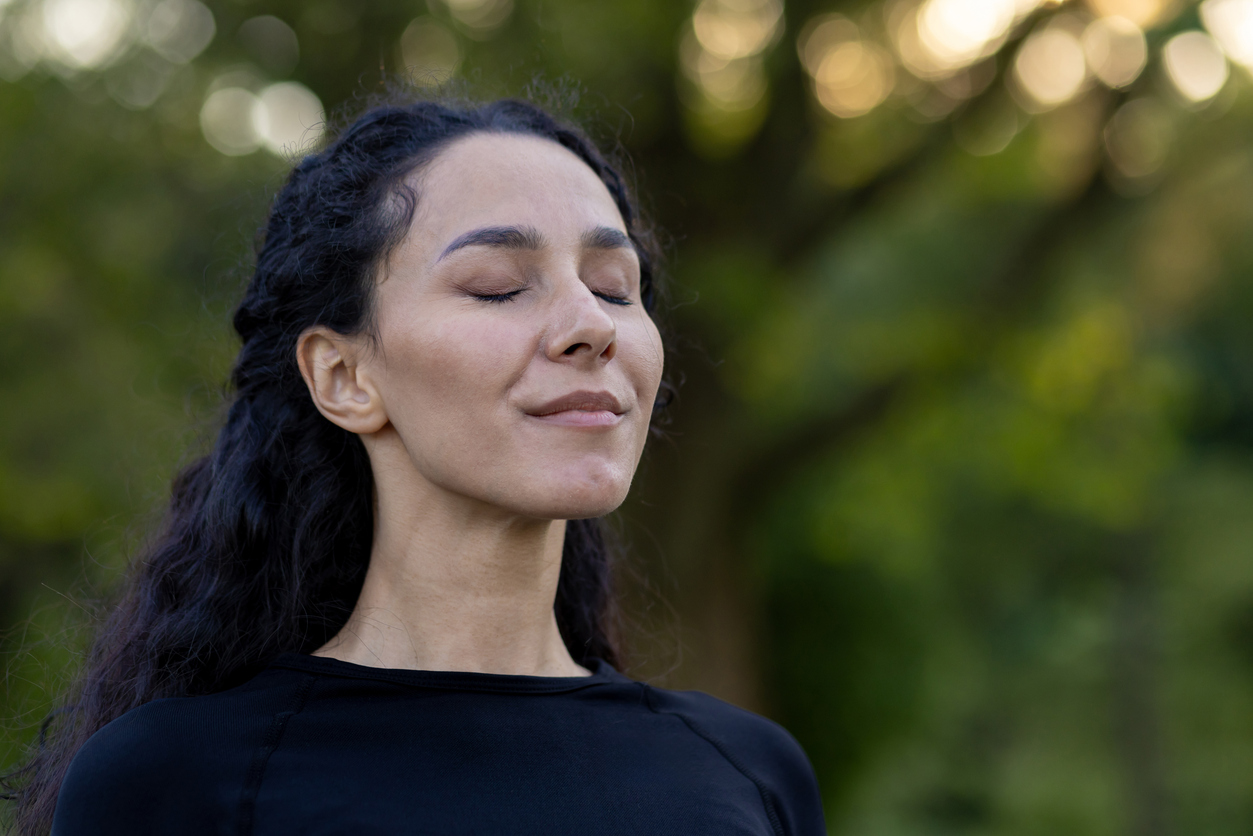
This time of year tends to bring changes in routine. There’s often more time spent walking, traveling, working in the yard, or simply being more active day to day. Along with that, it is common for neck, shoulder, or back discomfort to become more noticeable.
One factor I often look at when patients describe these issues is how they breathe.
Breathing is not just about getting oxygen. It has a direct impact on posture, muscle tension, and how efficiently your body moves.
Why Proper Breathing Affects More Than Just Your Lungs
Proper breathing influences how the body functions as a whole.
When we are stressed, tense or in pain we breathe more shallowly, which then increases tension and pain.
Breathing patterns affect multiple systems at the same time. When breathing becomes shallow or inefficient—even slightly—the body begins to compensate. That compensation can show up in ways you may not immediately suspect.
For example:
- Muscle tension: Shallow breathing shifts the workload to the neck and shoulder muscles, which can lead to tightness and discomfort
- Posture: Inefficient breathing patterns can pull the body forward, contributing to slouching or a forward head position
- Core stability: The diaphragm works together with the core muscles. When it isn’t functioning well, the spine loses important support
- Energy levels: Inefficient breathing can make physical activity feel more tiring than it should
- Movement quality: Walking, bending, and exercise rely on breathing to support smooth, coordinated movement
When breathing is working well, the body moves more efficiently and with less strain. When it is not, the body compensates—and that is often when discomfort begins.
The Connection Between Breathing and Posture
The diaphragm is a large muscle located just below the lungs. It is not the only muscle involved in breathing—there are a LOTof respiratory muscles, and they also play an important role in posture. When you breathe deeply and in a controlled way, these muscles work together with your core muscles to help stabilize your spine.
With shallow breathing:
- The shoulders rise and become tense
- The chest tightens
- The lower core becomes less active
With balanced, deeper breathing:
- The ribcage expands naturally
- The core gently engages
- The spine is supported better
Our ribcage should expand and contract as we breathe. If our posture is not great (for example, from excess screen time or sitting), our ribcage will not move well, which then makes our postural tightness worse and so on. Watch an animal breathe – their ribcage is soft and expanding and contracting. Ours should too but often does not!
This is one of the reasons I pay close attention to breathing when addressing posture. Improving breathing can support better alignment and more efficient movement.
How This Shows Up in Spring and Summer Activities
As activity levels increase, inefficient breathing patterns tend to become more noticeable.
You may feel it as:
- Shoulder tightness during longer walks
- Back strain during gardening or yard work
- Stiffness after sitting for extended periods while traveling
- Limited rotation or endurance during activities like golf or pickleball
These experiences are often linked to how the body is breathing during movement.
Watch: How to Breathe Properly
Understanding the concept is important but seeing how to apply it makes a difference.
In this short video, I demonstrate how to breathe properly:
This simple demonstration shows what proper breathing should look like and how the ribcage should move.
Watch video here: https://www.youtube.com/shorts/XLvaOd89haA
Practice for a few minutes each day
Even a few minutes of focused breathing can help retrain your pattern
A Change That Can Make a Big Difference
Improving how you breathe is one of the simplest ways to support better posture and reduce unnecessary strain on your body. As you get the hang of it you can practice during a walk, while working in the yard, or while sitting at home.
If you have been noticing tightness, fatigue, or discomfort during your daily activities, it may not just be the muscles—it may be how your body is breathing.
Joseph Pilates said that “Breathing is the first act of life and the last. Our very life depends on it.” And, improper breathing is a “tremendous handicap to longevity.”
Ready to Feel the Difference?
If you are dealing with back pain, ongoing stiffness, or discomfort that isn’t improving, it’s important to look at how your body is functioning as a whole.
Breathing is one piece of that picture, along with posture, movement patterns, and how your muscles are working together.
When I work with patients, I focus on identifying the underlying causes of discomfort—not just the symptoms—so we can create a plan that supports lasting improvement.
If something does not feel right, it’s worth taking a closer look.
If you would like a more complete evaluation of how your breathing, posture, and movement may be contributing to what you’re feeling, I invite you to call and schedule an appointment. Together, we can identify what is going on and create a plan to help you move more comfortably.