
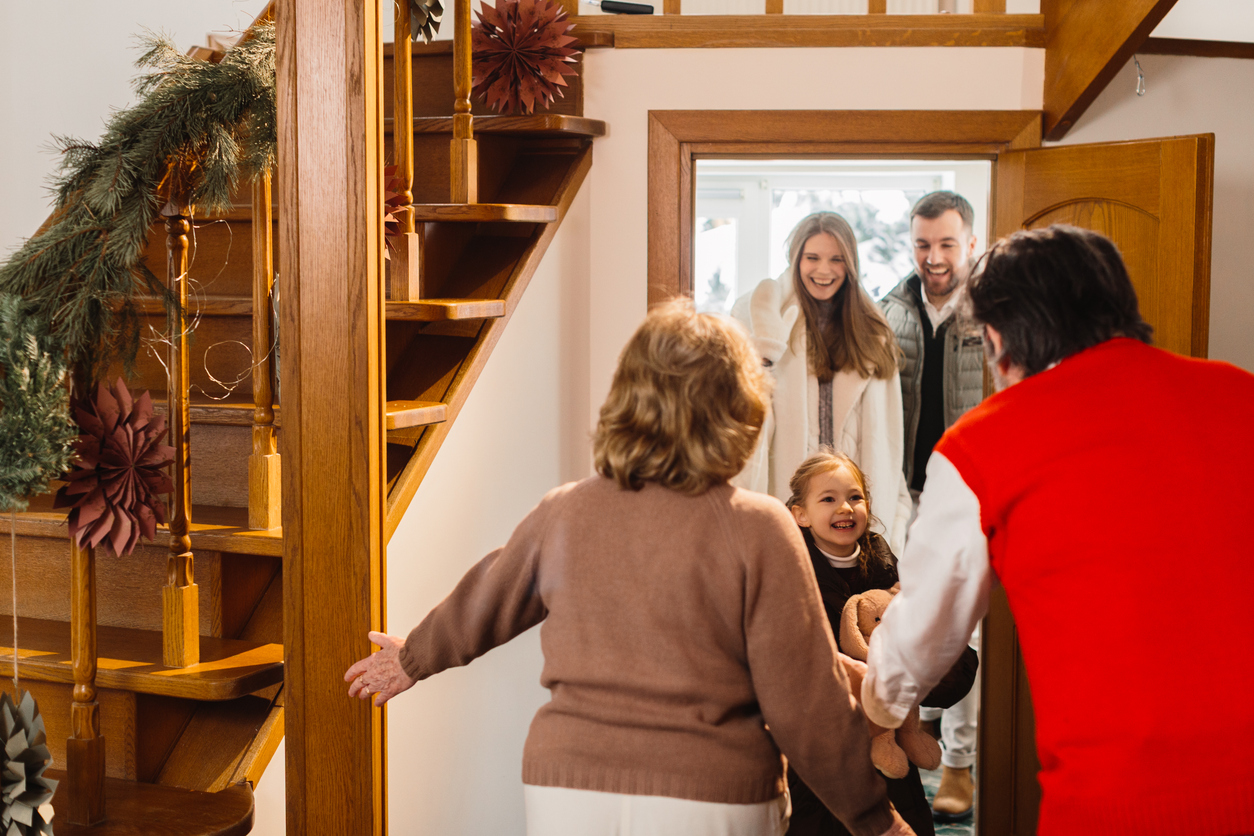
Holiday gatherings bring family and friends together, often with overnight guests, extra belongings, and more activity throughout the house. They also offer an opportunity to look at home safety together and reduce the risk of trips and falls, whether you are preparing your own home or visiting relatives.
Carrying a toddler down the stairs, arriving with an armful of gifts, or getting around on crutches after a sports injury can make an overlooked obstacle harder to navigate. As a physical therapist, I help people recover from injuries, and I also want to help people of all ages prevent them. A few thoughtful changes around the house can make everyday activities safer and help everyone enjoy time together.
Walk Through the Home Together
Walking through the house with family members can help you notice hazards and understand what would make getting around easier for each person. It also gives everyone a chance to suggest improvements before the holiday bustle begins.
Start at the entrance and follow the routes people use to reach the living areas, kitchen, bathroom, and bedrooms. Ask family members where they have difficulty or feel unsure of their footing. Someone who lives in the home may automatically navigate an obstacle that a guest would never notice.
Consider each person’s needs. A relative recovering from surgery may struggle with a low chair. Someone using crutches may need more room to move. A guest carrying a suitcase may overlook a step.
Look for Hazards That Are Easy to Miss
 During your home safety walkthrough, pay attention to:
- Steps and changes in floor level. A single step between rooms or at a doorway can be hard to see, especially when the flooring looks continuous. Securely installed anti-slip stair tape in a contrasting color can highlight the step’s edge.
- Lighting. Make sure entrances, stairs, and hallways are well lit. Provide nightlights along the route from guest bedrooms to the bathroom.
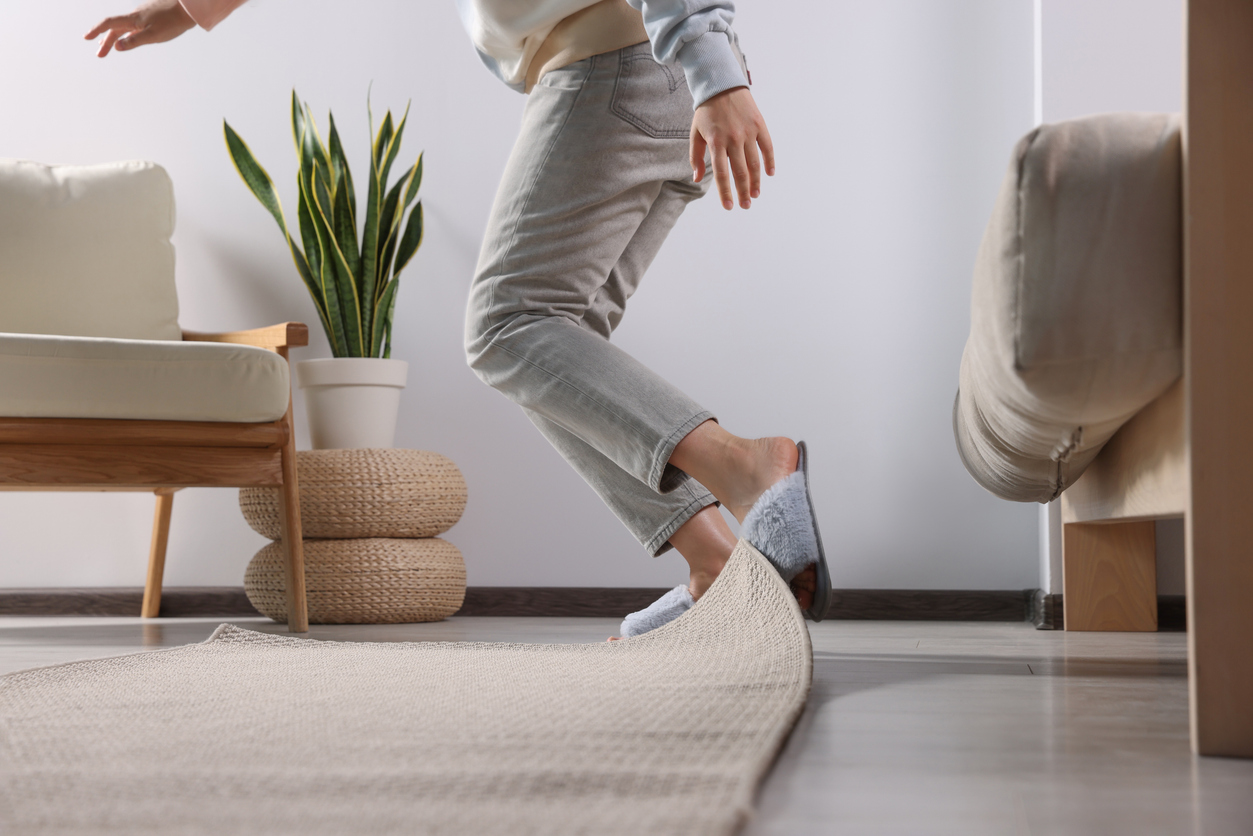
- Walking paths. Remove loose rugs, cords, shoes, and clutter. Keep luggage and gifts out of pathways and consider where pets tend to settle.
- Bathrooms. Keep floors dry and use nonslip surfaces in the tub or shower. When support is needed, properly installed grab bars provide a secure handhold. Towel racks are not designed to support body weight.
- Stairs and handrails. Check for loose carpeting, uneven steps, and unstable railings.
- Outdoor approaches. Look for uneven pavement, raised sidewalk edges, wet leaves, and poorly lit steps between the parking area and the door.
- Everyday items. Keep frequently used dishes, toiletries, and other essentials within easy reach so family members and guests do not need to stretch overhead or climb on furniture.
- Electrical cords. Cords from lamps, Christmas tree lights, and other decorations can create tripping hazards if they cross walkways. Reroute the cords out of walking paths or, if needed, move the lamp or decoration closer to an outlet.
The CDC’s fall-prevention guidance includes improving lighting, removing tripping hazards, and adding appropriate support around stairs and bathrooms.
Make a Plan Everyone Can Use
Have the conversation before a fall happens. A family member may say, “It has always been like that, and nothing has happened.” Acknowledge that the arrangement is familiar, then explain that fixing a hazard now can help prevent an injury later.
Some loved ones may hesitate because they do not want to make a fuss or take up your time. Reassure them that you are happy to help. A small repair now can take far less time than helping someone through recovery from a fall.
The consequences can extend beyond the initial injury. A broken hip, for example, can require surgery, hospitalization, and a rehabilitation stay. Recovery can be lengthy, and some people do not regain their previous independence. Addressing hazards together is one way to help protect the activities and routines your loved ones value.
Identify the hazards that need to be addressed and agree on who will handle each one. Clearing a hallway or adding a nightlight may be fast and simple. Repairing a railing or installing grab bars may require professional help.
Include the people who live in the home in these decisions. Ask, “Would this make getting around easier?” Their routines and preferences matter.
For overnight visits, discuss sleeping arrangements before guests arrive. A bedroom near a bathroom or on the main floor may make the visit more comfortable for someone who has difficulty with stairs.
Once the changes are made, walk through the area together again. Check that pathways are clear, support is secure, and everyone can comfortably use the space.
When Movement Needs Attention Too
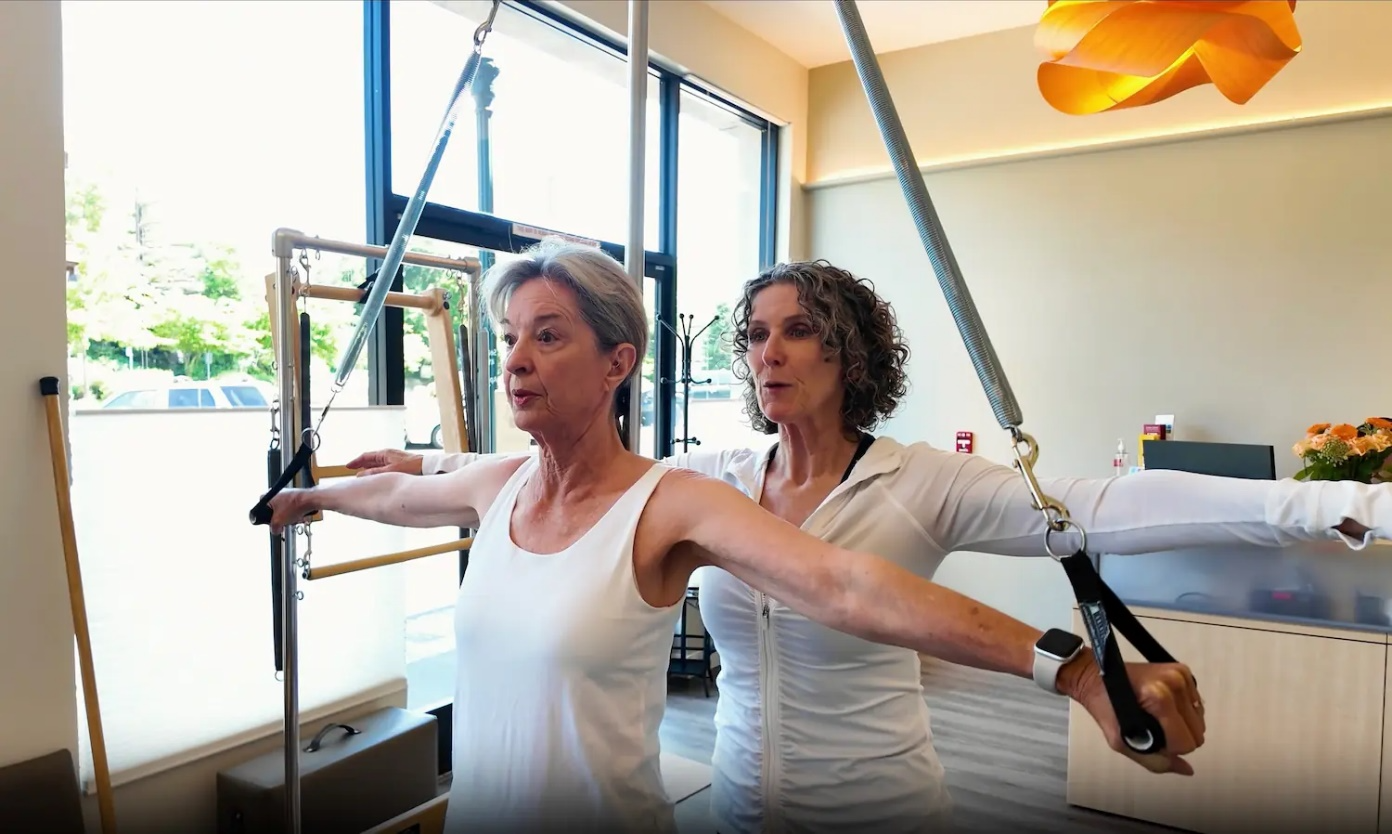 Home safety improvements work alongside strength, balance, and comfortable movement. If you have fallen, nearly fallen, or find that pain, an injury, or unsteadiness makes everyday activities difficult, a physical therapy evaluation can help identify what needs attention.
I can assess walking, balance, strength, and everyday movements, then develop a plan around the activities that matter to you. Together, we can help you move more comfortably and confidently so you can enjoy the holiday preparations, gatherings, and traditions that make this time of year special.